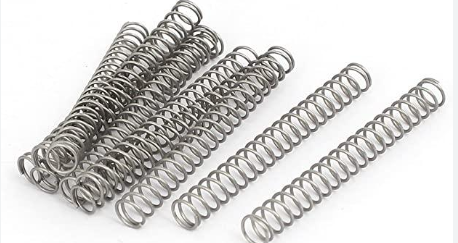
When the consequences of a starting failure are severe, a well-engineered spring starter for diesel engine provides the kind of absolute reliability that battery-dependent systems simply cannot match. From emergency power systems to remote industrial installations, diesel engines equipped with spring starters maintain their readiness regardless of electrical system status, battery condition, or ambient temperature.
The Specific Demands of Diesel Engine Starting
Starting a diesel engine places extreme demands on the starting system. The high compression ratios characteristic of diesel engines—ranging from 14:1 to more than 22:1 in modern designs—require substantial torque to turn the crankshaft at sufficient speed for compression ignition to occur. This demand is compounded in cold weather, when increased fuel viscosity, thicker lubricating oil, and reduced battery performance all work against successful starting.
The spring starter addresses every one of these challenges through mechanical energy storage that is entirely independent of temperature, electrical state, or infrastructure availability.
How Spring Energy Provides Superior Diesel Starting
Energy Density and Storage Duration
A properly designed spring starter stores enough energy to provide multiple starting attempts from a single winding. The energy remains available indefinitely—a spring wound on Monday will deliver the same torque on Friday or next month. This long-term energy retention is a fundamental advantage over batteries, which self-discharge over time and lose capacity in storage.
Torque Characteristics
Spring release delivers high initial torque that rapidly overcomes compression resistance and accelerates the crankshaft. The torque delivery curve of a properly designed spring starter is well-matched to the torque requirements of diesel engine starting—high at the beginning when overcoming static friction and compression, tapering as the engine approaches self-sustaining speed.
Temperature Independence
The mechanical properties of the spring—its stored energy, spring constant, and release behavior—are essentially constant across the full range of industrial operating temperatures. Whether starting at -40°C in an Arctic oil field or at +50°C in a Middle Eastern desert, the spring delivers consistent performance.
Installation Options for Diesel Applications
Spring starters for diesel engines are available in several mounting configurations to accommodate different engine designs and installation constraints. Direct mount configurations attach the starter directly to the engine flywheel housing. Remote mount configurations use a flexible drive shaft to position the starter body away from the engine, useful when direct mounting space is limited. Tandem configurations use two spring starters for additional torque on very large engines.
Selection Criteria for Diesel Engine Spring Starters
Proper selection requires considering:
- Engine displacement and compression ratio
- Minimum starting temperature requirements
- Number of starting attempts required per winding
- Available mounting space and configuration requirements
- Required certifications (ATEX, IECEx, etc.)
- Expected starting frequency and duty cycle
Maintenance Requirements
Diesel spring starters are notably low-maintenance compared to electric starting systems. Routine maintenance typically consists of quarterly inspection of all visible components, annual internal inspection and lubrication, verification of proper engagement depth and alignment, and testing of the release mechanism. This maintenance can typically be performed by site technicians without specialized tools.
Frequently Asked Questions
What diesel engine sizes are spring starters available for?
Spring starters are available for diesel engines ranging from small industrial gensets of a few liters to very large marine and power plant engines exceeding 30 liters of displacement. The manufacturer’s product range should cover your specific engine size.
See also: IB Tutor: Enhancing Academic Excellence for International Baccalaureate Students
Can I retrofit a spring starter to an existing diesel engine?
Yes, in most cases. Retrofitting requires that the engine flywheel ring gear is compatible with the spring starter’s drive pinion and that suitable mounting points are available. The manufacturer can advise on retrofit compatibility for specific engine models.
How does a spring starter perform in very humid conditions?
Quality spring starters include sealing designed to protect internal components from moisture. For particularly humid environments, selecting units with enhanced sealing and corrosion-resistant materials provides additional protection.
Conclusion
The spring starter represents the engineering answer to the most demanding diesel starting requirements. Its combination of high torque output, temperature independence, long-term energy retention, and infrastructure independence makes it the preferred starting technology for the world’s most critical diesel engine applications. When reliability without compromise is the standard, the spring starter delivers.